
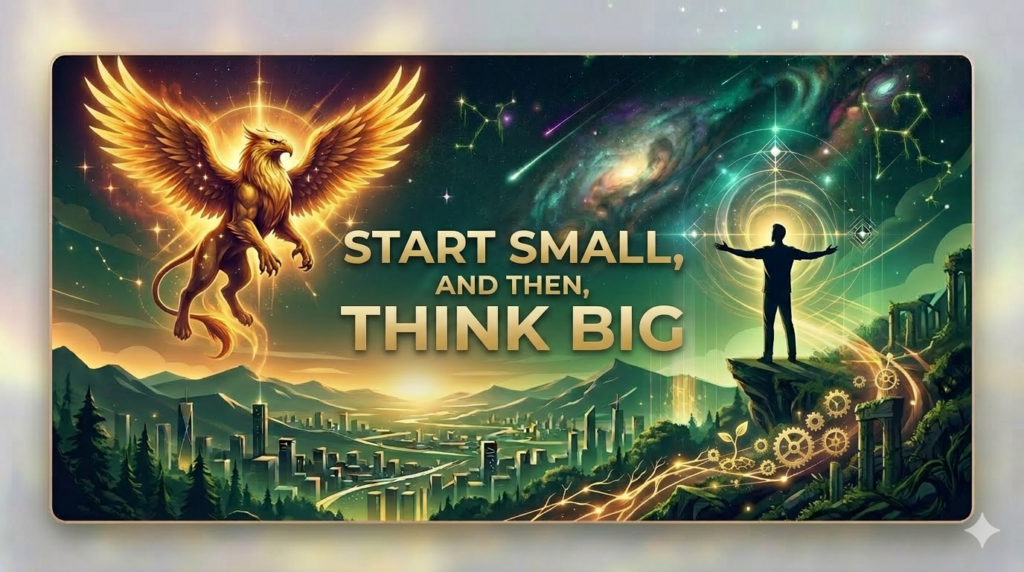
Every big story starts small.
A small idea.
A small step.
A small beginning that almost nobody notices.
But what makes those beginnings powerful is not their size.
It is the vision behind them.
Some people wait until they feel ready to start big.
Others understand something different.
They start where they are.
But they think far beyond where they stand.
The principle Start Small, Think Big exists in that space.
Between humble beginnings and ambitious vision.
Because the people who build extraordinary things rarely begin with extraordinary resources.
They begin with ordinary steps and extraordinary thinking.
TLDR: The Principle in 30 Seconds
If you remember three ideas from this principle, remember this:
• Small beginnings are not limitations. They are foundations.
• Big thinking expands direction and opportunity.
• Growth happens when action and vision work together.
Starting small gets you moving.
Thinking big keeps you moving forward.
What “Start Small, Think Big” Really Means
Most people misunderstand success.
They believe they need:
More money.
More resources.
More certainty.
Before they begin.
But progress rarely starts with abundance.
It starts with what is available right now.
Starting small means:
• taking action with limited resources
• focusing on manageable steps
• building momentum gradually
Thinking big means:
• having a long-term vision
• aiming beyond immediate results
• refusing to limit your potential
Together, they create balance.
Without action, big thinking becomes fantasy.
Without vision, small action becomes stagnation.
The Psychology Behind This Principle
This principle works because it aligns with how progress actually happens.
The Power of Small Wins
Psychologists emphasize the importance of small wins.
Each small achievement builds confidence and momentum.
Momentum makes it easier to continue.
The Role of Vision
At the same time, long-term vision creates direction.
It answers an important question:
Where is all this effort going?
Without vision, effort feels repetitive.
With vision, effort feels meaningful.
The Compound Effect
Small actions repeated consistently grow over time.
But when those actions are guided by a large vision, their impact multiplies.
This is how small beginnings turn into massive outcomes.
Real Examples of Starting Small and Thinking Big
This principle appears repeatedly in real-world success stories.
Jeff Bezos
Jeff Bezos started Amazon as a small online bookstore.
But his vision was never small.
He believed in building a company that could dominate global commerce.
That combination of small execution and massive thinking turned Amazon into one of the largest companies in the world.
Steve Jobs
Steve Jobs started building computers in a garage.
But he imagined a future where technology would reshape everyday life.
That vision drove Apple to create products that transformed entire industries.
Elon Musk
Elon Musk began with limited resources in industries like space and electric vehicles.
Yet his vision extended far beyond immediate capabilities.
From Tesla to SpaceX, his approach reflects starting small while thinking at a global scale.
Sara Blakely
Sara Blakely started Spanx with $5,000 and no background in fashion.
Her belief in the product and long-term vision helped build a billion-dollar company.
Why Most People Get This Wrong
People often fall into one of two extremes.
Thinking Big Without Starting
They have ideas, plans, and ambitions.
But no action.
Ideas without execution never become reality.
Starting Small Without Thinking Big
They take action.
But without direction.
This leads to effort without meaningful progress.
The real advantage comes from combining both.
Signs You Are Applying This Principle
You:
• take consistent action, even if it feels small
• maintain a clear long-term vision
• see small steps as part of a bigger journey
• stay patient while aiming high
This combination creates both momentum and direction.
How to Apply “Start Small, Think Big”
Take the First Step Immediately
Do not wait for perfect conditions.
Start with what you have.
Define a Bigger Vision
Ask yourself:
If this works, how far could it go?
Let your thinking expand beyond your current situation.
Focus on Consistency
Small actions repeated daily outperform occasional large efforts.
Adjust Without Losing Vision
Your path may change.
Your vision should not shrink.
The Hidden Advantage
Most people hesitate to start because their beginning feels too small.
This creates an opportunity.
Those who start anyway face less competition.
And over time, their small beginnings compound into significant progress.
By the time others decide to start, they are already far ahead.
The Truth About Big Outcomes
Big outcomes rarely come from big starts.
They come from:
Small actions
Repeated consistently
Guided by a large vision
This is the pattern behind most meaningful success.
The Aura Coded Principle
At Aura Coded, Start Small, Think Big represents the bridge between reality and possibility.
You start where you are.
But you refuse to think only in terms of where you are.
Because the size of your beginning does not determine the size of your future.
Your thinking does.
Explore More Principles
The Start Small Think Big mindset becomes stronger when combined with other principles.
Explore related ideas:
• Do The Work
• Believe Big
• Know Your Worth
• Stay Curious
Together these principles create a powerful system for growth and execution.
FAQ
What does “start small think big” mean?
It means taking action with what you have now while maintaining a large, ambitious vision for the future.
Why is starting small important?
It reduces friction, builds momentum, and allows progress without waiting for perfect conditions.
Why is thinking big important?
It provides direction and ensures that small actions lead to meaningful long-term outcomes.